First Nations health: can families actually access care?
In plain English
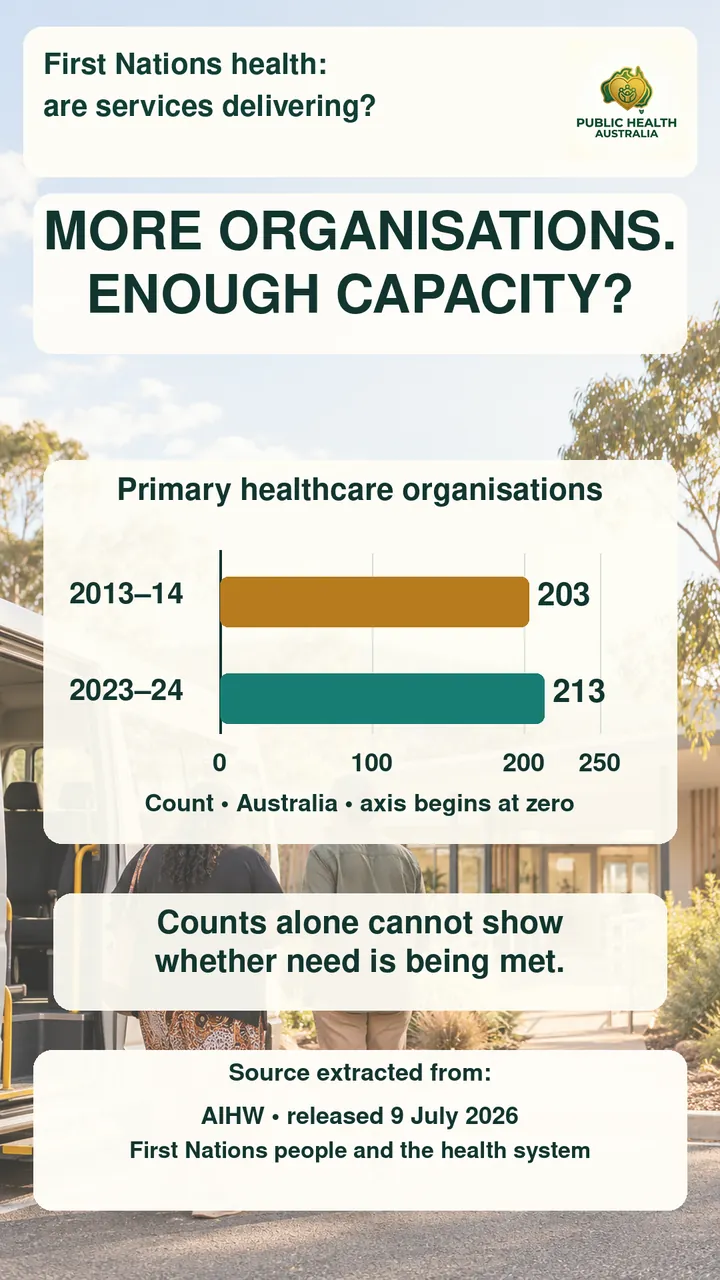
A health promise means little if the right care is still out of reach. Australia's Health Performance Framework links three questions: how healthy are people, what shapes their health, and how well do services respond? The AIHW reports 213 First Nations-specific primary health care organisations in 2023–24, up from 203 in 2013–14. That is a count of organisations. It shows growth, but it does not tell us whether capacity kept pace with need or whether every family can get care.
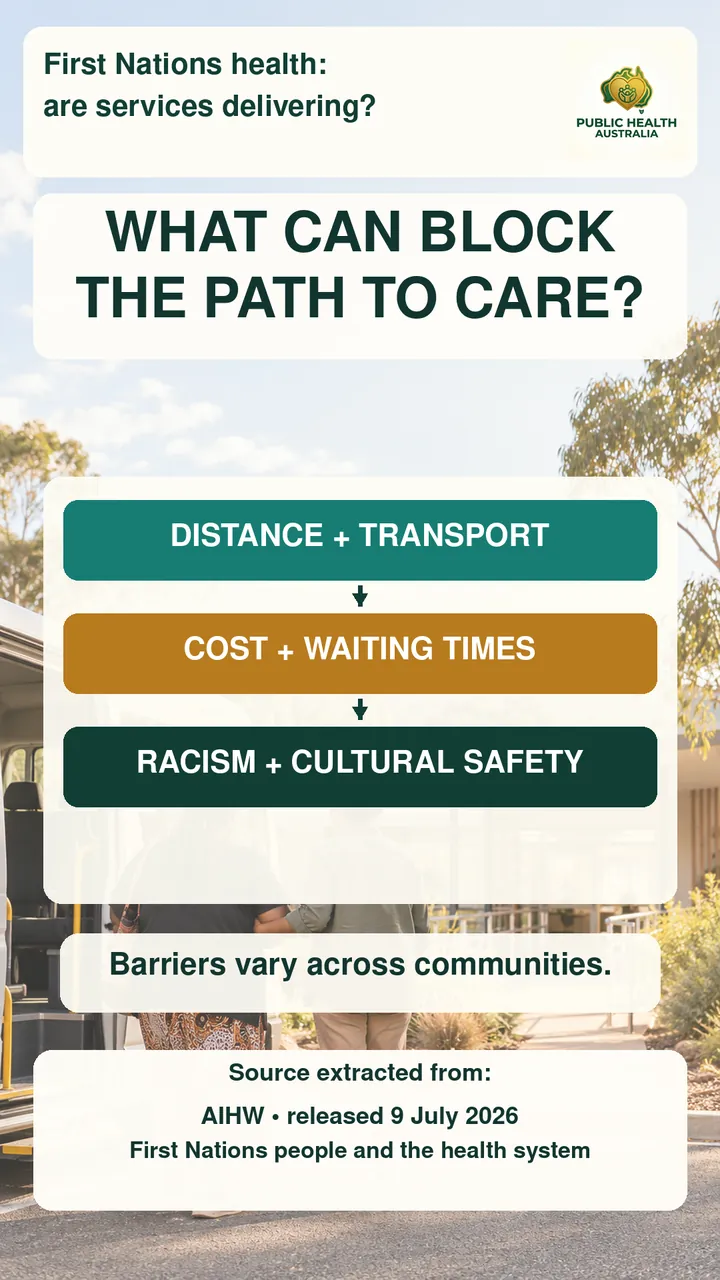
Distance, transport, cost and waiting times can still block access, and so can racism and care that does not feel culturally safe. Aboriginal community-controlled health organisations offer a locally governed response, bringing physical, social, emotional and cultural wellbeing together. Our interpretation: measure whether people receive timely, culturally safe care and completed follow-up, not simply how many organisations exist.
Key numbers
- 213: First Nations-specific primary health care organisations in 2023–24.
- 203: the same count in 2013–14.
- A count, not access: these figures are organisation numbers, not access rates, and not only community-controlled services.
Sources
These are the sources named in the video and its description.
- AIHW: First Nations people and the health system (9 July 2026)
- NACCHO: Aboriginal Community Controlled Health Organisations (undated; checked 8 October 2026)
Last checked: 30 October 2026. This is general information, not medical advice.
Spot an error? Message us with the page link and, if you can, a link to the source. We check every report and correct mistakes openly.