Stroke signs: know FAST and call 000
In plain English
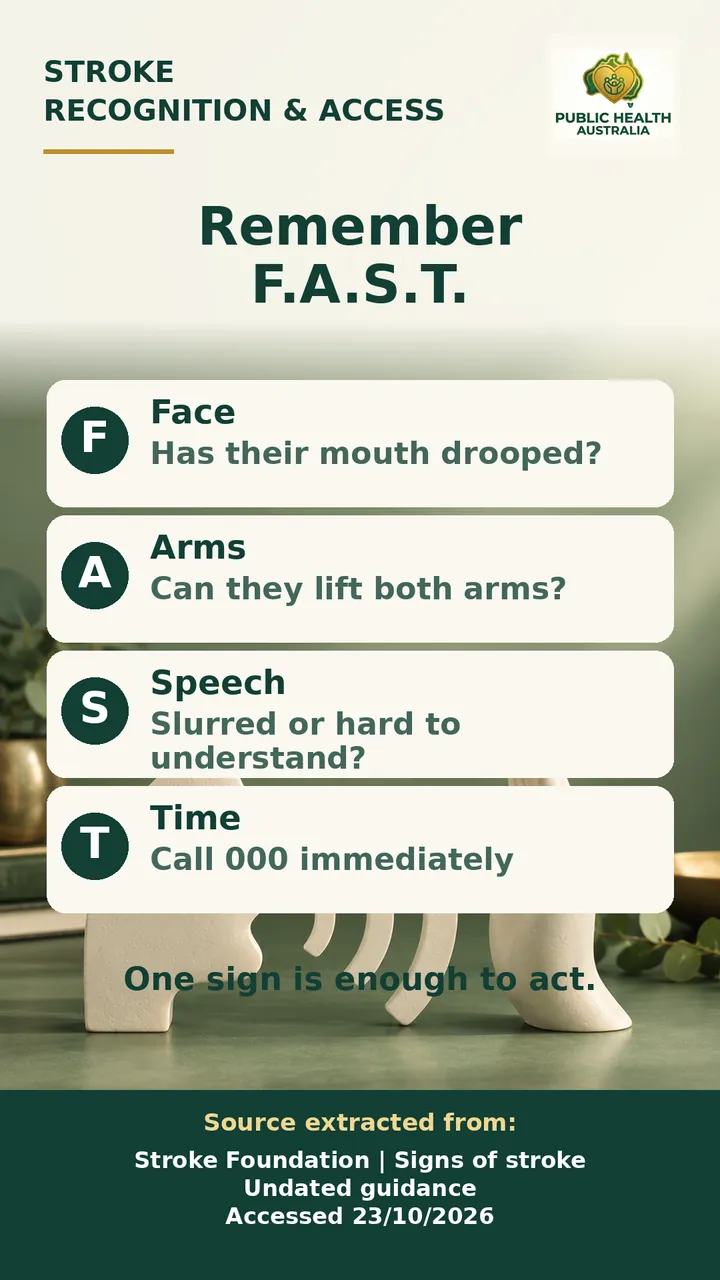
If someone's face droops, their arm weakens or their speech changes, suspect stroke and call triple zero (000) immediately, wherever you live. Remember FAST: Face (has their mouth drooped?), Arms (can they lift both?), Speech (is it slurred or hard to understand?) and Time (call an ambulance). FAST does not catch every stroke. Sudden vision changes or loss of balance can also be signs. Even if symptoms disappear, call 000.
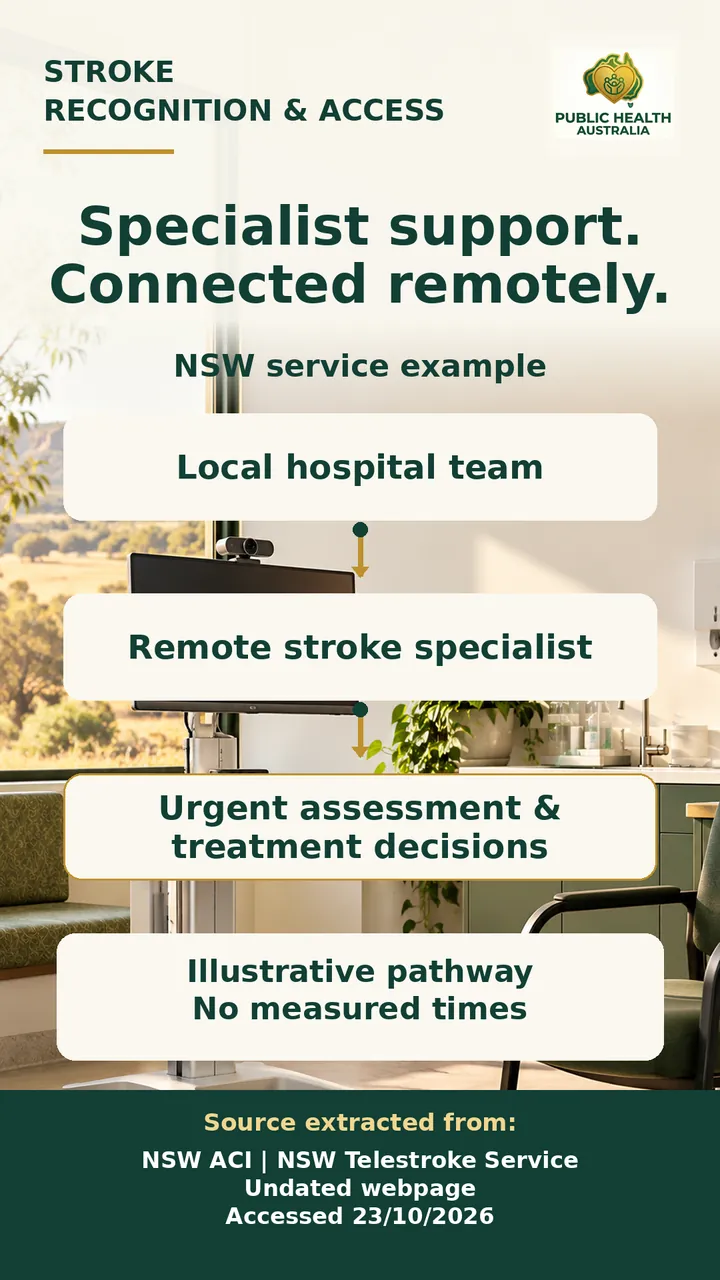
Recognising stroke is only the beginning. For rural and regional communities, access also depends on specialist support and pathways between hospitals. The NSW Telestroke Service connects local hospital teams with stroke specialists remotely, to improve access to urgent diagnosis and treatment. When you read an access map, ask what it measures. Estimated travel time alone cannot tell us how quickly someone was treated or how well they recovered. We need evidence on the whole journey, including transfers.
Key numbers
- 000: call for an ambulance if you suspect a stroke, even if the symptoms go away.
- 4 checks: Face, Arms, Speech, Time (FAST).
- Other signs: sudden vision changes or loss of balance can also mean stroke.
- 11 June 2026: release date of the Stroke Clinical Care Standard cited in the video.
Sources
These are the sources named in the video and its description.
- Stroke Foundation: Signs of stroke
- Australian Commission on Safety and Quality in Health Care: Stroke Clinical Care Standard (released 11 June 2026)
- NSW Agency for Clinical Innovation: NSW Telestroke Service
Last checked: 30 October 2026. This is general information, not medical advice.
Spot an error? Message us with the page link and, if you can, a link to the source. We check every report and correct mistakes openly.